MicroBT WhatsMiner M78S: Powering Next-Gen SHA-256 Mining
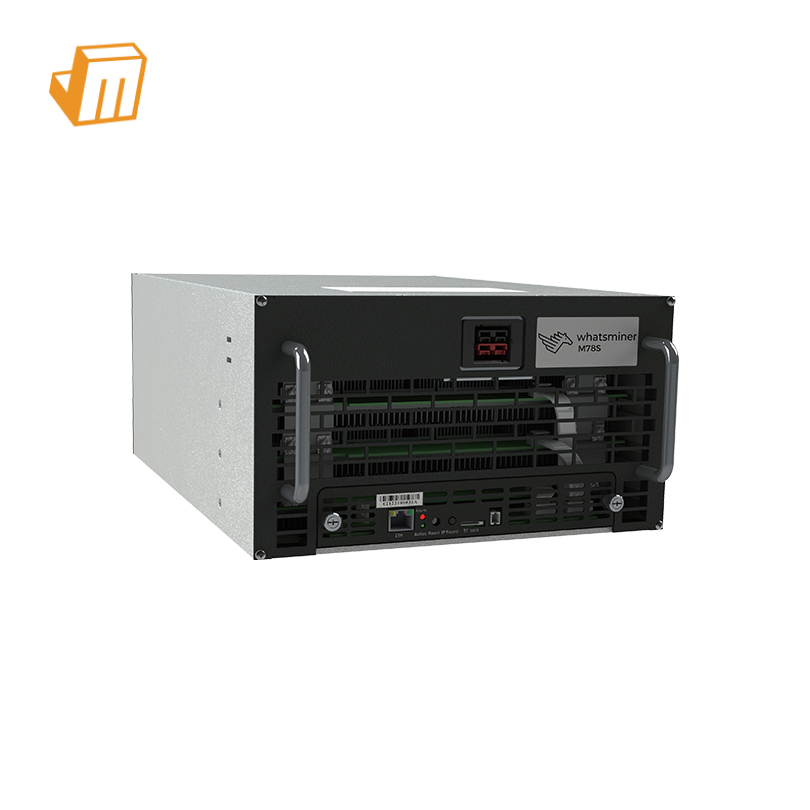
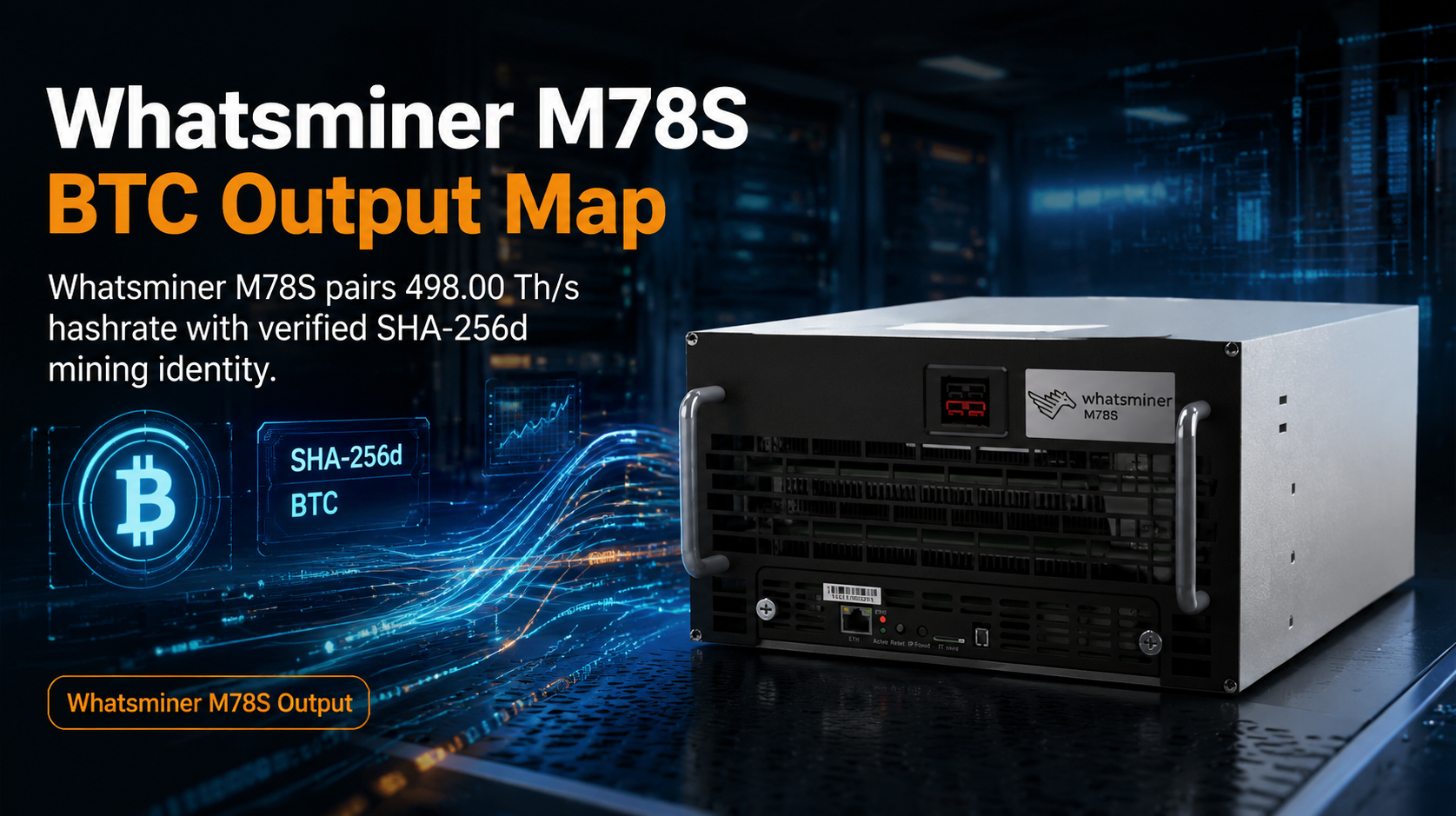
The MicroBT WhatsMiner M78S emerges as a formidable contender in the high-performance SHA-256 ASIC mining landscape, designed for serious operators and procurement teams scrutinizing every watt and terahash. Delivering a robust 498.00 Th/s while consuming 6723 W, this machine is engineered for the relentless pursuit of Bitcoin. Its specification profile positions it squarely within the industrial-scale mining segment, catering to those who possess the necessary infrastructure to support its significant power demands and who are acutely focused on maximizing hash output per unit of capital expenditure. This review delves into the M78S's core parameters, assessing its capabilities and the real-world implications for large-scale deployments, providing critical insights for optimizing operational efficiency and long-term profitability in a highly competitive market.
The M78S is not merely an incremental upgrade; it represents MicroBT's continued commitment to pushing the boundaries of SHA-256 processing power. Its design reflects an understanding of the evolving challenges faced by modern mining operations, including escalating network difficulty and the persistent pressure on energy costs. Target buyers for such a machine are typically professional mining farms, data center operators, and large-scale investors who require high-density computing solutions capable of contributing substantial hash power to the Bitcoin network. These entities prioritize raw performance, energy efficiency, and operational stability, making the M78S a compelling option for those looking to expand their footprint or upgrade existing fleets with cutting-edge technology. The strategic value lies in its capacity to deliver substantial mining output, directly impacting revenue potential, provided the supporting infrastructure is robust enough to handle its considerable electrical and thermal load.
Maximizing ROI: Hashrate & Efficiency Breakdown
The operational efficiency of any ASIC miner is paramount to its long-term viability, and the MicroBT WhatsMiner M78S presents a compelling case with its formidable specifications. The synergy between its high hashrate and its specific power consumption dictates its potential for profitability, especially when juxtaposed against the backdrop of fluctuating Bitcoin prices and network difficulty. Understanding these core metrics allows for a precise evaluation of the M78S's economic footprint and its capacity to generate consistent returns.
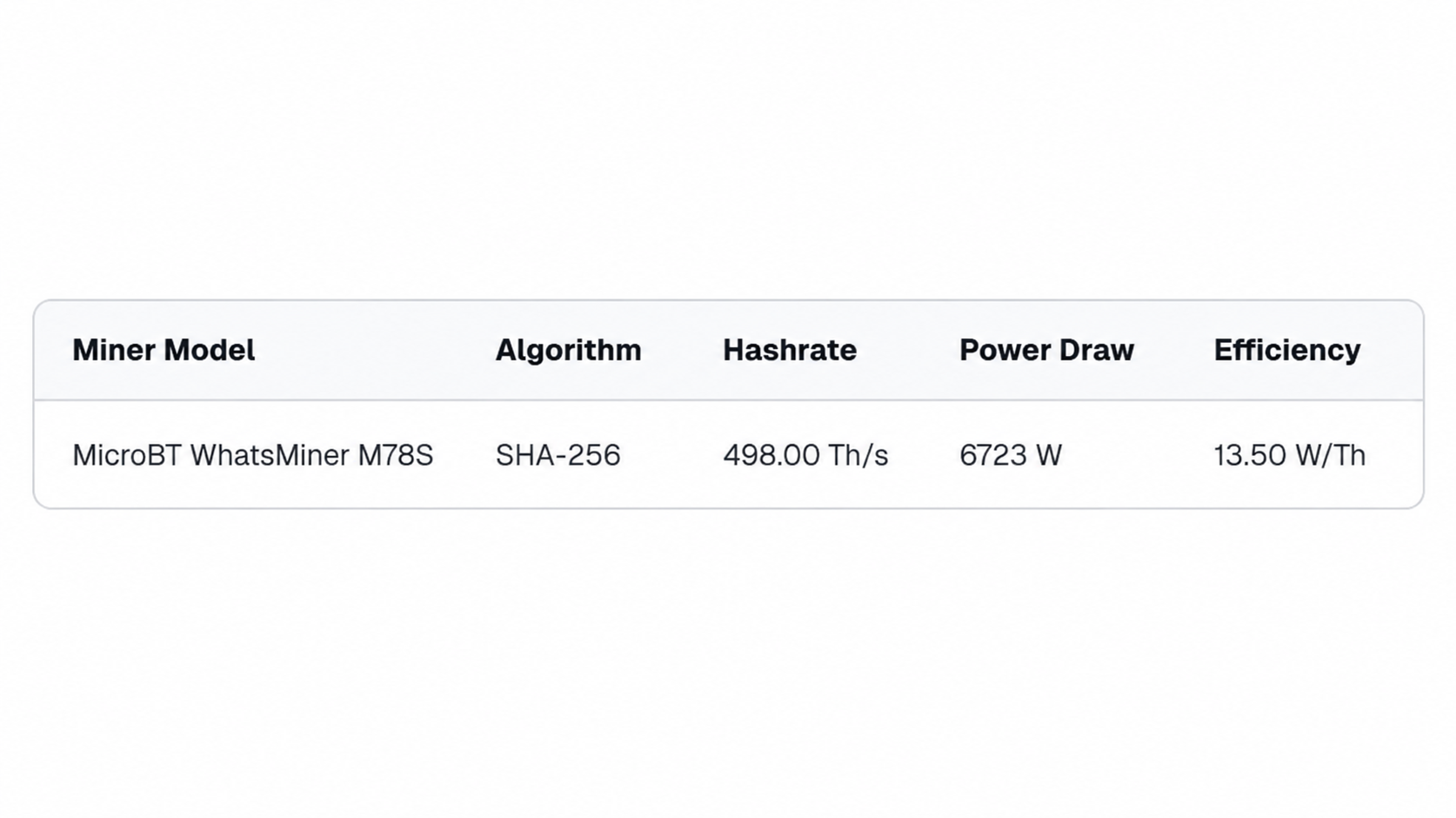
With an efficiency rating of 13.50 W/Th, the M78S stands as a highly competitive machine, optimizing the conversion of electrical energy into computational power. This efficiency metric is crucial for defining the operational expenditure (OPEX) profile of a mining farm. Lower W/Th values directly translate to reduced electricity costs per terahash, thereby protecting profit margins even when Bitcoin's price experiences volatility or network difficulty increases. The 6723 W power draw per unit necessitates careful planning for electrical infrastructure, but the high hashrate of 498.00 Th/s ensures that each unit contributes significantly to the overall mining output. For large-scale operations, this balance of power and performance is critical for achieving economies of scale, allowing for a concentrated deployment of hashing power that effectively mitigates the impact of rising energy prices and helps maintain a competitive edge in the global mining arena. The M78S’s specifications are engineered to deliver high throughput while maintaining a respectable efficiency, a non-negotiable factor for sustainable mining.
Facility Infrastructure & Cooling Demands
Deploying the MicroBT WhatsMiner M78S effectively requires a robust and meticulously planned facility infrastructure capable of supporting its substantial electrical and thermal demands. Each M78S unit draws 6723 W, which translates to a significant load when multiple units are deployed. This necessitates industrial-grade power distribution units (PDUs), circuit breakers, and wiring that can safely and efficiently deliver the required wattage without risking overloads or power disruptions. Furthermore, the total power consumption of a farm populated with M78S units will dictate the transformer capacity and utility service requirements, which are critical considerations for site selection and long-term operational costs. Overlooking these fundamental electrical prerequisites can lead to costly downtime, equipment damage, and even safety hazards, undermining the entire investment.
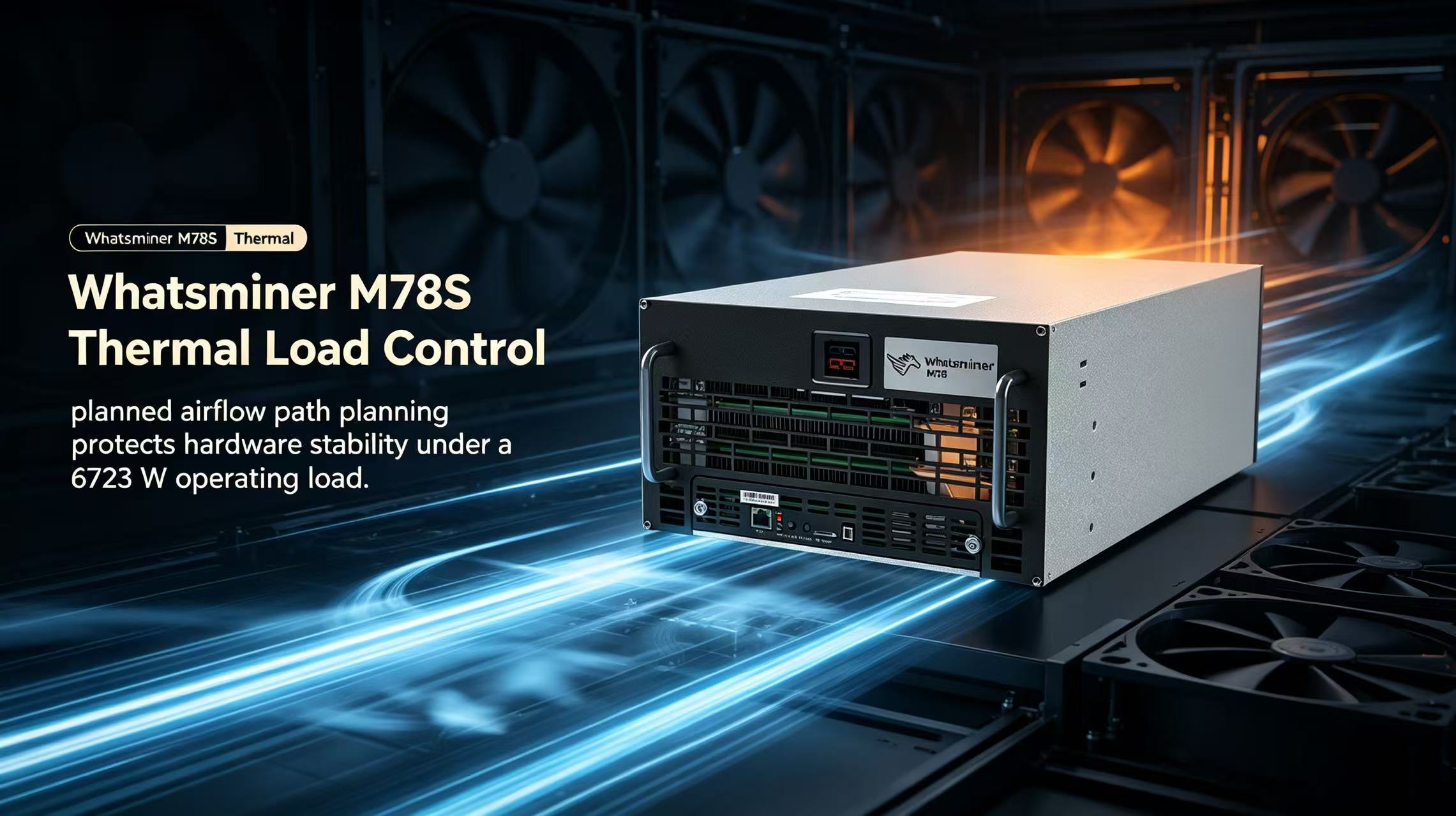
Beyond electrical supply, the heat dissipation from each 6723 W unit is considerable, mandating a sophisticated cooling strategy. The M78S, like other high-performance ASICs, generates a substantial amount of waste heat that must be efficiently removed to maintain optimal operating temperatures and prevent thermal throttling or premature hardware failure. This typically involves advanced air cooling systems with high-CFM fans, or increasingly, immersion cooling solutions for maximum heat transfer and noise reduction. Proper airflow management, hot/cold aisle containment, and environmental controls are essential to ensure the longevity and stable performance of the miners. Investing in a resilient cooling infrastructure not only protects the hardware but also optimizes its efficiency, as machines operating within their ideal temperature range tend to perform more consistently and consume power more efficiently.
> Pro Tip: When planning for M78S deployments, always factor in at least a 20-25% buffer on your electrical and cooling infrastructure capacity beyond the sum of the miners' rated specifications. This margin accounts for voltage fluctuations, startup surges, and ensures headroom for future expansion or unexpected environmental shifts, significantly enhancing operational resilience.
Final Assessment
The MicroBT WhatsMiner M78S stands as a testament to MicroBT's engineering prowess, offering a powerful, high-efficiency solution for SHA-256 mining operations. Its 498.00 Th/s hashrate at 13.50 W/Th positions it favorably against contemporary machines, making it a compelling choice for those seeking to maximize their Bitcoin production. However, its significant 6723 W power draw underscores the necessity of a well-prepared and robust electrical and cooling infrastructure, reinforcing its suitability for professional, large-scale mining farms rather than smaller, residential setups. Procurement teams focused on long-term ROI and operational stability will find the M78S an attractive asset, provided their facilities are up to the task of supporting its demands.
> Verdict: The MicroBT WhatsMiner M78S is ideal for industrial-scale mining operations and professional data centers that have established, high-capacity electrical and cooling infrastructure. It is the definitive choice for operators prioritizing raw SHA-256 hashrate and competitive energy efficiency to drive Bitcoin production at scale. To validate procurement decisions and ensure optimal deployment, visit the JingleMining website for expert consulting and comprehensive solutions.
Frequently Asked Questions (FAQ)
Q: What kind of electrical infrastructure is needed for the WhatsMiner M78S?
A: The M78S requires a robust industrial-grade electrical setup, including high-capacity PDUs, appropriate circuit breakers, and heavy-gauge wiring to safely handle its 6723 W power draw. Professional electricians should assess and install the necessary infrastructure.
Q: How does the M78S's efficiency impact profitability?
A: With an efficiency of 13.50 W/Th, the M78S is designed to convert electricity into hashing power effectively. This lower power consumption per terahash directly reduces operational electricity costs, enhancing overall profitability, especially in regions with higher energy rates.
Q: Is the WhatsMiner M78S suitable for home mining?
A: Due to its substantial power draw of 6723 W and the significant heat generated, the WhatsMiner M78S is generally not suitable for typical home mining environments. It requires specialized industrial-grade power and cooling systems, making it ideal for professional mining farms.