Revenue Assumption Baseline
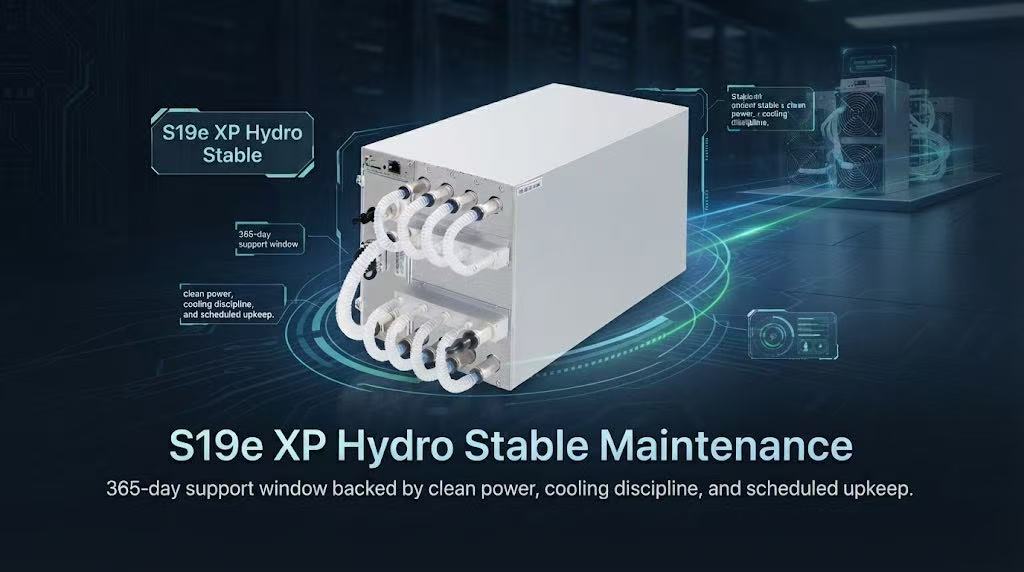
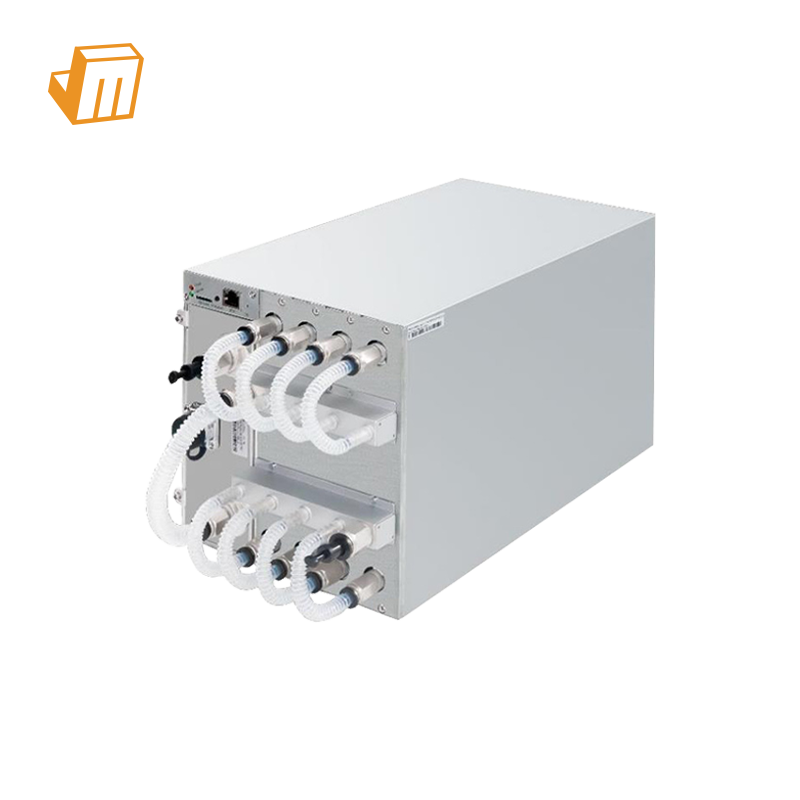
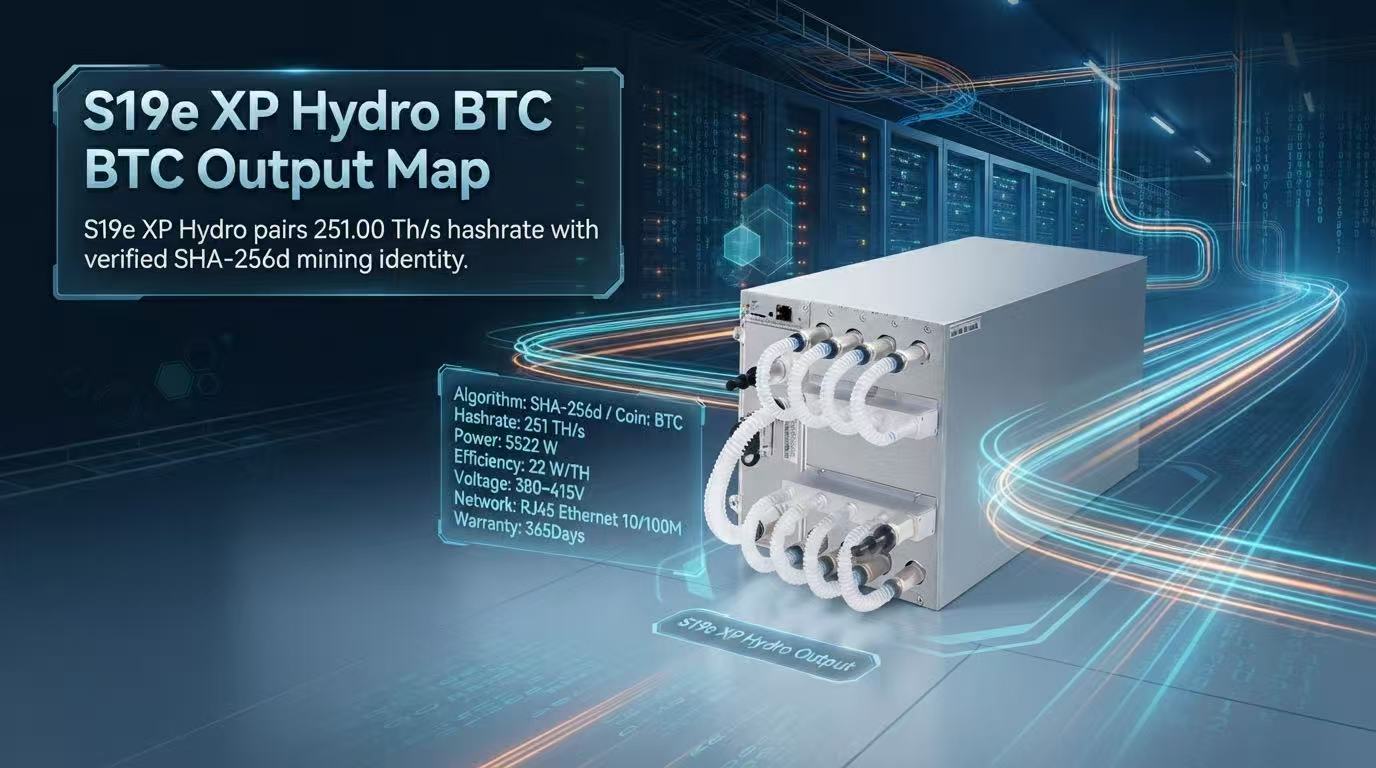
The Bitmain Antminer S19e XP Hydro, with its formidable 251.00 Th/s hashrate dedicated to the SHA-256 algorithm for Bitcoin (BTC) mining, represents a significant capital investment designed for high-throughput operations. Its operational efficiency of 22.00 W/Th, coupled with a total power draw of 5522 W, positions it as a competitive contender in the current mining landscape. Potential revenue generation is directly tied to several highly dynamic factors, including the fluctuating price of Bitcoin, the ever-increasing network difficulty, and transaction fees. While the raw hashing power provides a strong foundation for earning block rewards, the actual daily or monthly income will vary considerably with these market conditions.
To accurately project revenue, prospective buyers must consider the miner's consistent uptime, the pool fees associated with their chosen mining pool, and the inherent volatility of the cryptocurrency market. The S19e XP Hydro's specifications indicate a capacity for substantial BTC contributions, yet its financial viability hinges on the delicate balance between energy costs, which are substantial at 5522 W, and the prevailing market value of Bitcoin. Without specific real-time electricity rates or current BTC market data, providing a precise daily revenue figure is speculative; instead, the focus remains on the miner's robust specifications as the foundation for potential earnings.
Strategic ROI Matrix
Evaluating the Bitmain Antminer S19e XP Hydro requires a structured approach to understand how its core specifications interact with broader financial and market dynamics. The following matrix breaks down critical variables impacting the return on investment and payback period for this high-performance SHA-256 miner.
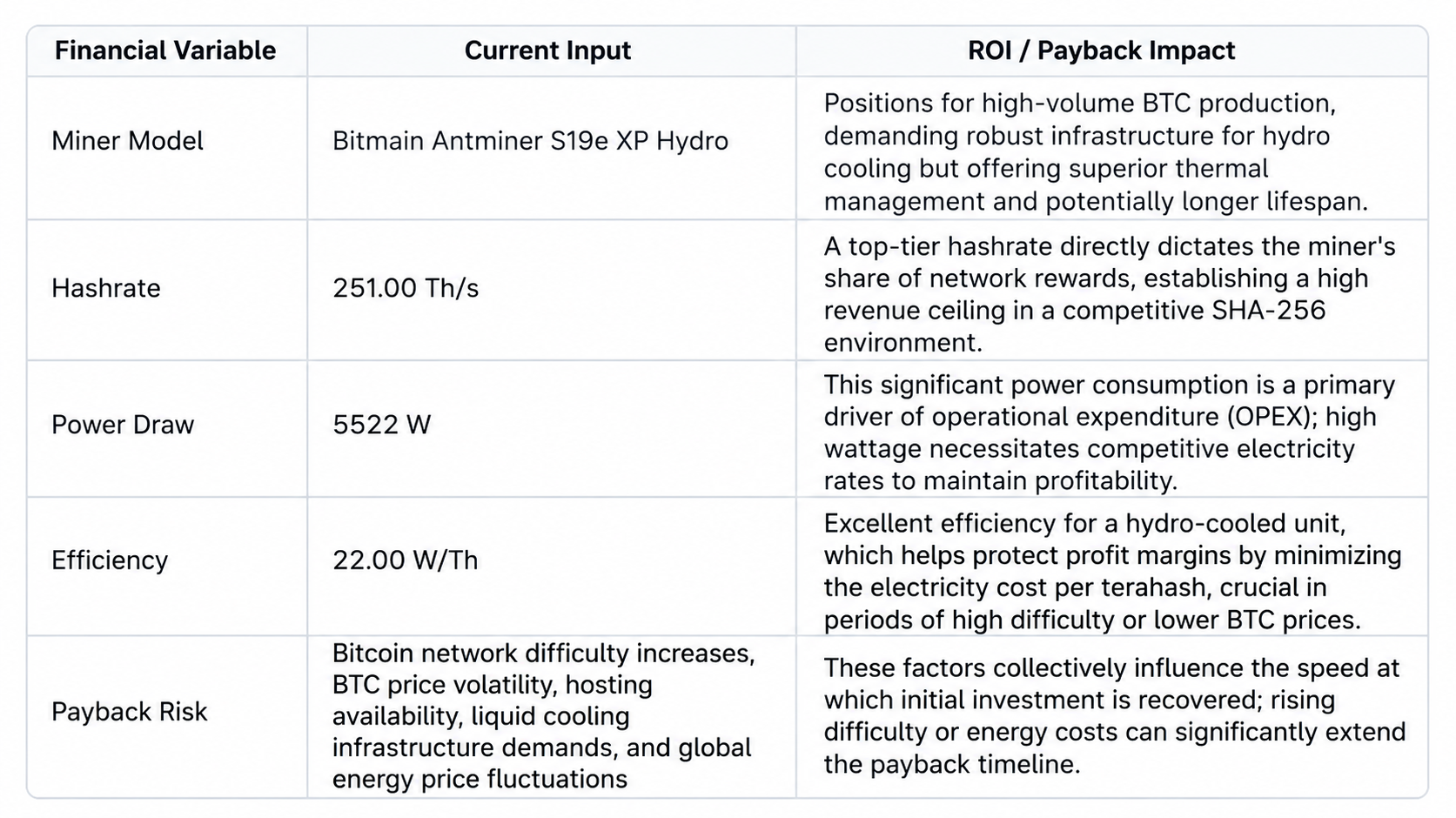
Interpreting this matrix reveals that the Antminer S19e XP Hydro is engineered for large-scale, professional mining operations capable of managing its substantial power and liquid cooling requirements. Its high hashrate and strong efficiency are designed to maximize BTC output and maintain competitive margins. However, the 5522 W power draw underscores the paramount importance of securing low-cost electricity. Payback risk is inherently tied to the unpredictable nature of Bitcoin's price and network difficulty, alongside the operational challenges and costs associated with maintaining a liquid-cooled setup. Strategic deployment in regions with stable, affordable power is non-negotiable for optimizing ROI.
Macro-to-Micro Payback Pressure
The broader cryptocurrency market environment exerts direct and profound pressure on the payback period and overall profitability of the Bitmain Antminer S19e XP Hydro. Bitcoin's price volatility, influenced by macroeconomic factors like interest rate changes, geopolitical events, and institutional investment trends, directly translates into revenue uncertainty for the miner. A significant downturn in BTC price can quickly erode daily earnings, extending the time required to recoup the initial capital expenditure and potentially pushing operations into unprofitability if electricity costs remain constant or rise. Conversely, price surges accelerate payback, but such periods are often accompanied by increased network difficulty, which then dilutes the individual miner's share of block rewards.
Furthermore, global energy price fluctuations represent a critical macro-to-micro pressure point. The S19e XP Hydro's 5522 W power consumption makes it highly sensitive to electricity rates. Regions experiencing energy crises, regulatory shifts impacting power grids, or increasing carbon taxes can see electricity costs surge, directly inflating the miner's operational expenditure (OPEX). This heightened OPEX, even with the unit's excellent 22.00 W/Th efficiency, can severely compress profit margins and lengthen the payback period, particularly for deployments in less energy-advantaged locations. Macro trends in hardware innovation also play a role; the continuous release of more efficient models by manufacturers like Bitmain means that today's cutting-edge efficiency can become tomorrow's average, increasing the risk of technological obsolescence and impacting long-term resale value.
Payback Verdict & Next Steps
The Bitmain Antminer S19e XP Hydro presents a compelling opportunity for robust SHA-256 mining, leveraging its 251.00 Th/s hashrate and 22.00 W/Th efficiency to secure a significant share of Bitcoin block rewards. However, its substantial 5522 W power draw necessitates a strategic, cost-optimized deployment environment, ideally with access to stable, low-cost hydroelectric or renewable energy sources to maximize its financial viability. While the hydro-cooling system offers superior performance and longevity, the inherent volatility of the Bitcoin market and the relentless increase in network difficulty remain primary variables influencing the actual payback timeline. A disciplined approach to OPEX management, particularly electricity costs, is paramount for realizing a favorable return on investment. For a personalized financial projection and to ensure optimal deployment readiness, we strongly recommend you contact JingleMining for a custom ROI model, procurement validation, or deployment consulting.
Frequently Asked Questions (FAQ)
Q: What variables matter most in payback analysis?
A: The most critical variables are the miner's hashrate, power consumption, and efficiency, alongside the cryptocurrency's market price, network difficulty, and your specific electricity rates. These factors collectively determine daily revenue and operational costs, directly influencing the time it takes to recoup your initial investment.
Q: How does electricity cost change the ROI outlook?
A: Electricity cost is the largest ongoing operational expense for ASIC miners, and even small fluctuations can dramatically alter the ROI outlook. Higher electricity rates directly reduce profit margins, extending the payback period and potentially making an otherwise profitable miner unprofitable if rates exceed a certain threshold.
Q: What should buyers verify before trusting a payback estimate?
A: Buyers should verify the accuracy of the miner's stated hashrate and efficiency, confirm their precise electricity rate including all hidden fees, and account for potential network difficulty increases and cryptocurrency price volatility. It is also crucial to factor in hosting fees, maintenance costs, and any relevant taxes.